
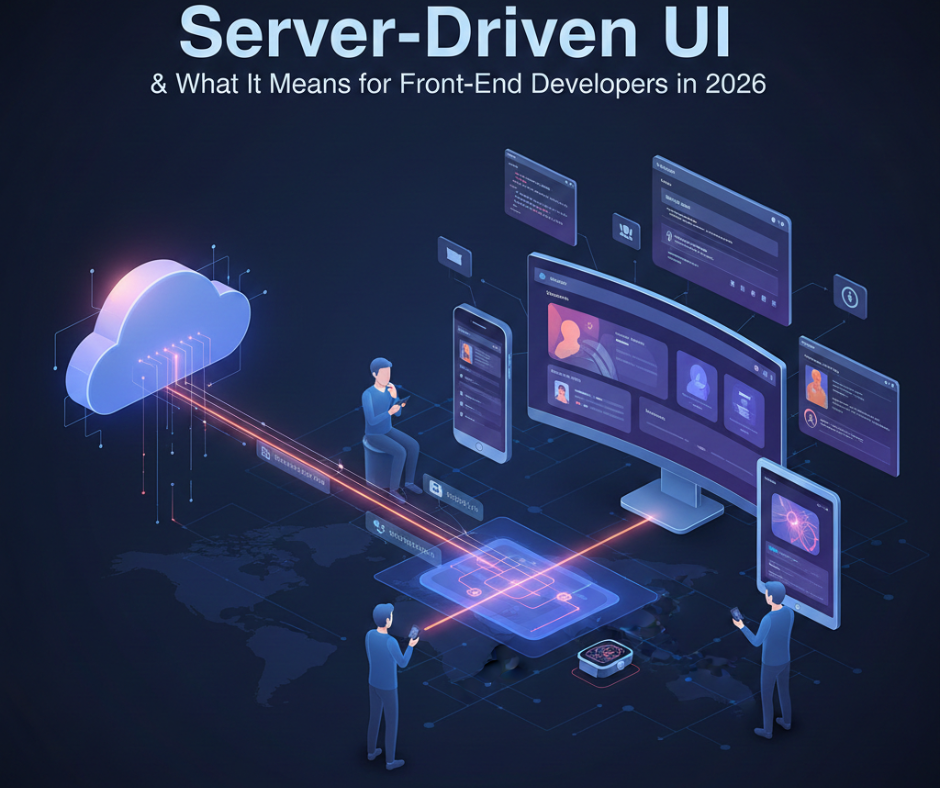
Server-Driven UI & What It Means for Front-End Developers in 2026
Server-Driven UI & What It Means for Front-End Developers in 2026
Front-end development is entering a new phase. As applications grow more complex and businesses demand faster updates, better performance, and personalized user experiences, a new approach is gaining momentum: Server-Driven UI (SDUI).
By 2026, Server-Driven UI is expected to play a major role in how modern applications are built—especially large-scale web and mobile platforms. For front-end developers, this shift doesn’t mean replacement, but evolution.
In this blog, we’ll explore what Server-Driven UI is, why it’s growing, and what it means for front-end developers in the coming years.
What Is Server-Driven UI?
Server-Driven UI is an architectural approach where the server controls the structure, layout, and behavior of the user interface, rather than hardcoding it entirely on the front end.
Instead of shipping UI logic inside the app, the server sends instructions—often in the form of structured data—that tells the client:
- What components to render
- How they should be arranged
- What data they should display
- How interactions should behave
The front end becomes a smart renderer, while the server becomes the decision-maker.
Why Server-Driven UI Is Gaining Popularity
Several trends are pushing Server-Driven UI into the spotlight:
1. Faster Feature Updates
With SDUI, teams can change UI behavior from the server without redeploying the front-end application. This is critical for platforms that release updates daily.
2. Personalization at Scale
Different users can receive different UI layouts based on location, behavior, device, or subscription level—without separate builds.
3. Reduced App Size
Less UI logic on the client means lighter applications, faster load times, and improved performance.
4. Cross-Platform Consistency
One server configuration can power web, mobile, and even smart-device interfaces, ensuring consistency across platforms.
How Server-Driven UI Works (Conceptually)
Instead of hardcoded UI flows, the server sends structured definitions describing:
- Component type (button, list, card, form)
- Content and data sources
- Layout rules
- Interaction logic (navigation, validation, visibility)
The front end interprets this configuration and renders the UI dynamically using pre-built components.
This separation allows UI logic to evolve without changing the client codebase.
What This Means for Front-End Developers in 2026
Server-Driven UI does not eliminate front-end developers—it changes their role.
1. Less Static Layout Work, More System Thinking
Front-end developers will spend less time building rigid page layouts and more time designing flexible component systems that can adapt to server instructions.
Skills like:
- Component abstraction
- Design systems
- Reusable UI patterns
will become more important than pixel-perfect static layouts.
2. Stronger Focus on Component Architecture
In a server-driven world, components must be:
- Highly reusable
- Configurable
- Predictable
- Well-documented
Front-end developers will act as UI platform engineers, creating robust component libraries that the server can control.
3. Closer Collaboration with Backend Teams
SDUI blurs the line between frontend and backend responsibilities.
Front-end developers will need to:
- Understand API-driven UI decisions
- Collaborate on UI schemas and contracts
- Ensure the server sends valid, renderable UI definitions
This leads to tighter cross-team collaboration and more holistic product development.
4. UX and Accessibility Become Even More Critical
Even if UI decisions come from the server, user experience remains a front-end responsibility.
Developers must ensure:
- Accessibility standards are met
- Dynamic layouts remain usable
- Animations and interactions feel natural
- Performance stays optimized
SDUI increases flexibility—but poor UX decisions can scale quickly if not handled carefully.
5. Front-End Developers Become Gatekeepers of Quality
Since the UI is driven by data, front-end developers will act as validators and guardians:
- Ensuring server configs don’t break layouts
- Preventing inaccessible or confusing UI states
- Maintaining design consistency
- Enforcing performance and usability constraints
This role requires strong technical judgment and product awareness.
Industries Adopting Server-Driven UI
By 2026, SDUI will be common in:
- E-commerce platforms (dynamic product layouts, offers)
- Fintech apps (region-based UI compliance)
- Media platforms (personalized feeds)
- Enterprise dashboards (role-based views)
- Mobile-first applications
Any platform that needs frequent UI updates without redeployment benefits from this model.
Challenges of Server-Driven UI
Despite its advantages, SDUI comes with challenges:
- Increased backend complexity
- Risk of over-engineering
- Debugging dynamic UI issues
- Dependency on server reliability
- UX consistency risks
Front-end developers will need to balance flexibility with control, ensuring SDUI is used where it adds value—not everywhere.
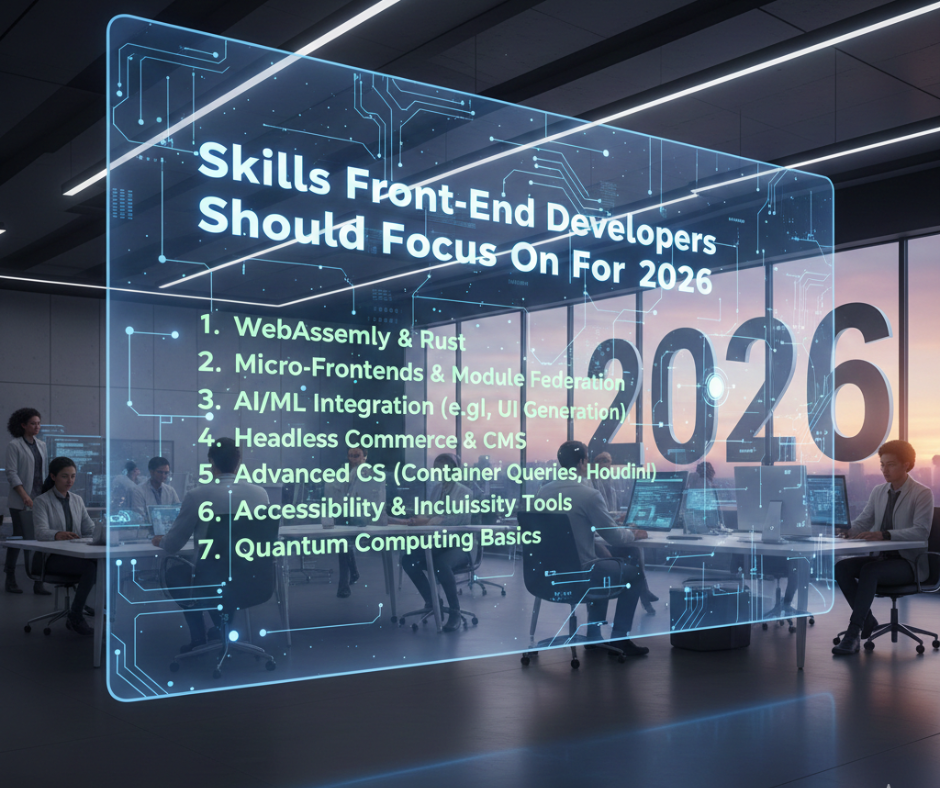
Skills Front-End Developers Should Focus on for 2026
To stay relevant in a Server-Driven UI future, developers should strengthen skills in:
- Component-driven architecture
- Design systems
- API communication patterns
- UX principles and accessibility
- Performance optimization
- State management
- Data-driven rendering concepts
Understanding how UI decisions are made, not just how they’re coded, will be a major differentiator.
Is Server-Driven UI the End of Traditional Front-End Development?
No—but it is a shift.
Traditional front-end development will still exist, especially for:
- Marketing websites
- Static content platforms
- Small-to-medium applications
However, large-scale applications will increasingly adopt SDUI for flexibility, speed, and scalability.
The future front-end developer is not just a UI builder—but a UI architect.
Conclusion
Server-Driven UI represents a significant evolution in front-end development. By 2026, it will shape how large applications are built, updated, and personalized at scale.
For front-end developers, this shift is an opportunity—not a threat.
Those who adapt by focusing on component systems, UX excellence, and cross-team collaboration will remain highly valuable in a post-AI, server-driven world.
The future belongs to developers who can design systems, not just screens.