

Is Learning Rust Worth It in 2026? A Student’s Take on Performance & Safety
As we move closer to 2026, students entering the tech industry face an important question: Which programming languages are worth learning for the future? With so many options available—Python, JavaScript, Go, Java—Rust continues to stand out as a language that sparks curiosity, debate, and ambition.
Rust isn’t the easiest language to learn, but it promises something developers value deeply: high performance without sacrificing safety. For students thinking about long-term careers, systems programming, or performance-critical software, Rust often appears as a serious contender.
So, is learning Rust in 2026 actually worth it for students? Let’s break it down.
Understanding Rust’s Core Philosophy
Rust was created with one major goal: eliminate common programming errors while maintaining speed. Traditional low-level languages offer performance but can be risky, leading to crashes, memory leaks, and security vulnerabilities. Rust aims to solve these problems at the language level.
For students, this means Rust teaches you to think carefully about how software behaves, rather than just making it work. While that learning curve is steeper, it builds strong fundamentals that carry over to other technologies.
Why Performance Still Matters in 2026
With cloud computing, AI systems, edge devices, and real-time applications growing rapidly, performance is more important than ever. Many modern systems need to handle massive workloads efficiently while keeping costs low.
Rust is increasingly used in:
- High-performance backend services
- Game engines and graphics tools
- Embedded and IoT systems
- Browsers and developer tooling
- Blockchain and distributed systems
For students, learning Rust opens doors to performance-focused domains that fewer developers can confidently work in—making it a powerful differentiation skill.
Safety: A Major Advantage for Future Developers
Software security is a growing concern worldwide. Bugs caused by memory misuse are responsible for a large percentage of system vulnerabilities. Rust’s approach to safety dramatically reduces these issues before the code even runs.
From a student’s perspective, this means:
- Fewer hidden bugs
- Better understanding of system behavior
- Strong habits for writing reliable software
- Skills aligned with security-conscious industries
As companies increasingly prioritize secure software, Rust knowledge becomes a future-proof asset.
Rust and the Job Market in 2026
While Rust may not have as many entry-level jobs as JavaScript or Python today, its demand is steadily growing. Companies using Rust often look for developers who understand systems deeply and can build reliable, long-lasting solutions.
For students, this presents a strategic advantage:
- Less competition compared to mainstream languages
- Higher-quality roles focused on engineering excellence
- Better long-term career growth
- Strong alignment with backend, infrastructure, and systems roles
Learning Rust doesn’t mean abandoning other languages—it means adding a powerful tool to your skill set.
Is Rust Too Hard for Students?
Rust has a reputation for being challenging—and that reputation isn’t entirely wrong. However, difficulty isn’t always a bad thing.
Learning Rust teaches students:
- Discipline in code structure
- Deeper understanding of memory and execution
- Patience and problem-solving skills
- How to write predictable, maintainable software
Many students find that once they understand Rust’s concepts, other languages feel easier and more intuitive. The early struggle pays off in long-term confidence.
Rust vs Other Languages for Students
Rust isn’t a replacement for everything. Instead, it complements other popular languages.
- JavaScript is ideal for web interfaces
- Python excels at rapid development and data tasks
- Java and C# dominate enterprise systems
- Rust shines where performance, safety, and reliability matter most
Students who combine Rust with one high-level language gain a balanced and competitive profile.
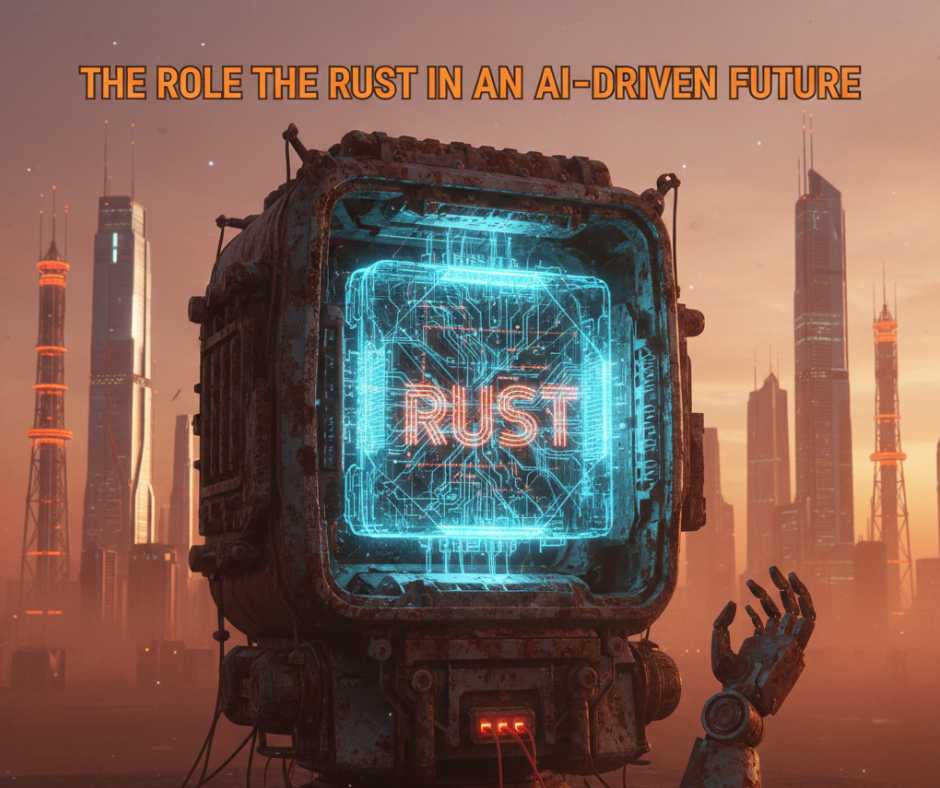
The Role of Rust in an AI-Driven Future
In a post-AI world, tools will increasingly generate code automatically. But understanding how systems truly work will still be a human advantage. Rust encourages this deep understanding.
AI can assist with writing code, but it struggles with:
- Low-level optimizations
- Safety guarantees
- Complex system design decisions
Developers who know Rust will be well-positioned to review, optimize, and secure AI-generated code, making them valuable even as automation grows.
Should Every Student Learn Rust?
Not necessarily—but every serious student should consider it.
Rust is especially worth learning if you are interested in:
- Backend or systems development
- Performance-critical applications
- Security and reliability
- Long-term engineering careers
- Standing out in a crowded job market
If your focus is purely front-end or rapid prototyping, Rust may not be your first language—but it can still be a powerful secondary skill.
Final Thoughts: Is Rust Worth It in 2026?
From a student’s perspective, learning Rust in 2026 is less about quick wins and more about long-term growth. It challenges you, sharpens your thinking, and prepares you for complex, high-impact roles.
Rust rewards patience with mastery. While it may not deliver instant results like some languages, it builds a foundation that lasts for years.
If you’re a student who wants to future-proof your skills, work on meaningful systems, and stand out as a serious developer—then yes, learning Rust in 2026 is absolutely worth it.